Backflow testing for apartment and condo buildings
Any residential building with more than six self-contained units on Regional water is multi-residential under By-law 24-2018 and has to have its backflow preventer tested every year. The device is usually in the mechanical room on the incoming service, and the notice goes to the corporation or owner, not to residents.
Which residential buildings the by-law covers
Section 3.1 of By-law 24-2018 applies it to ICI and multi-residential properties supplied with Regional water and excludes buildings of residential occupancy under the Building Code. The line between the two is section 1.1(t): multi-residential means an apartment building, condominium property, townhouse property, co-op property or similar residential property with more than six self-contained dwelling units. Seven units and up: the annual test applies. A single detached house, a duplex, a triplex: it does not.
That covers most of Durham’s rental apartment stock, every condo tower and mid-rise, townhouse condominium corporations, and co-ops. It also covers the older walk-ups in central Oshawa and Whitby, which tend to have older devices in tighter mechanical rooms.
Where the device is and what it usually is
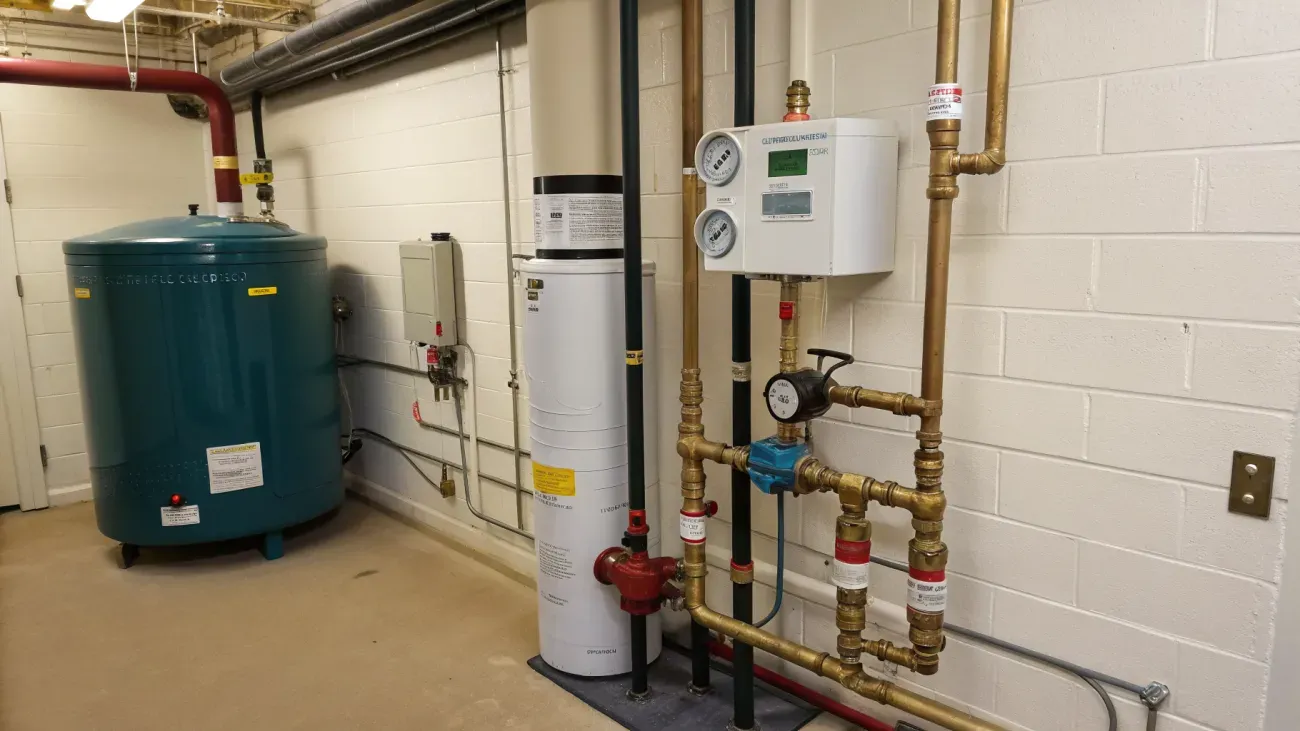
The premise isolation device is on the incoming water service, almost always in the mechanical or meter room in the basement or at grade, right after the meter. For a domestic-water-only building it is normally a double check valve assembly (DCVA): two check bodies in a row with four small test cocks and no drain. Buildings with a boiler plant that uses chemical treatment often have a second device, a reduced pressure principle assembly (RPZ), on the boiler make-up line, because treated boiler water is a severe hazard. Buildings with irrigated grounds may have a PVB outside on the irrigation line.
Each device is tested annually, each has its own report, and each may have its own notice. If your notice lists more than one device, send them all in one request and we do everything on one visit.
Who is responsible
- Rental buildings: the owner. The notice goes to the owner of record; the super or property manager typically handles it.
- Condominium corporations: the corporation, for the common service device. Boards delegate to the manager. Unit owners are not involved unless a unit has its own device (rare in residential).
- Co-ops and townhouse corporations: the corporation, same as condos.
Under section 6.6 the owner keeps five years of test reports on site. For a condo that means the management office or wherever the corporation’s compliance records live.
What the visit looks like in a residential building
- We confirm access with the super or manager and pick a low-demand window, usually mid-morning or early afternoon on a weekday.
- The super posts a short notice if the domestic line will be off (“water off for approximately one hour on Tuesday between 10 and 11”).
- The tester locates the device, confirms it against the Region’s record, isolates it, takes the readings, restores water, and tags it. 30 to 60 minutes per device.
- The report is filed through BSI Online within the by-law’s 28-day window. You get a copy for the file and, if you want it, a one-page summary for the board.
- Thirty days before next year’s due date, the manager gets a reminder.
If the device fails, the tester notifies the Region within 24 hours and we coordinate a licensed plumber for the repair and come back to retest. Details on the failed test page.
Common problems in residential buildings, and what to do about them
| Problem | What it means |
|---|---|
| Device buried behind bikes, storage, or a new wall | Clear access before the visit; the tester needs to reach the test cocks and shut-offs |
| Shut-off valves that have not been operated in years | Tell us; seized valves may need a plumber before a valid test is possible |
| Old device with no test cocks | Not a testable assembly. The Region may require replacement; that is a plumber’s job |
| Nobody knows if last year’s test was filed | Send us the tag details; we check the record before you pay for another test |
| Notice addressed to a former management company | Ask the owner to update the contact with the Region; meanwhile, send us the notice and we get it done |
Budgeting for the board
Testing is priced per device, with the visit shared. Repairs, if a device fails, are separate and quoted first. For an annual budget line, count the devices the Region has on file for the building (the notice tells you) and ask us for a per-device price; the cost page explains what moves it. A one-page compliance summary per year is included if you want it.
Apartments and condos: questions
Our building has 12 units. Does the by-law apply?
Yes. Section 1.1 defines multi-residential as more than six self-contained units, and section 3.1 applies the by-law to multi-residential properties on Regional water. A six-unit building is at the line; seven and up is in.
Who is responsible in a condominium: the corporation or unit owners?
The corporation, for the device on the common water service. The notice goes to the corporation or its manager. Unit owners are not notified individually and are not tested individually. The board usually delegates scheduling to the property manager or superintendent.
Will residents lose water during the test?
The line the device is on is off for the readings, usually 30 to 60 minutes. If the device is the premise isolation assembly on the main service, that is the whole building for that window. We book mid-morning or early afternoon on a weekday when demand is lowest, and the super can post a notice the day before.
We have a boiler. Does that change anything?
Often. Boiler make-up water with chemical treatment is a severe hazard, so there may be an RPZ on the boiler feed as well as the DCVA on the domestic service. Both are tested annually. The Region's record lists every device it knows about; the notice names them.
Book the building's test
Tell us the address, who has the mechanical room key, and a quiet window. We test, tag, file, and send the board a one-page summary.