Backflow Testing for a New Commercial Tenant or Building Purchase: What Changes Hands
When a Durham commercial building sells or a tenant changes, the backflow record, the annual test clock and the survey requirement move with it. What to ask for on closing and do first.
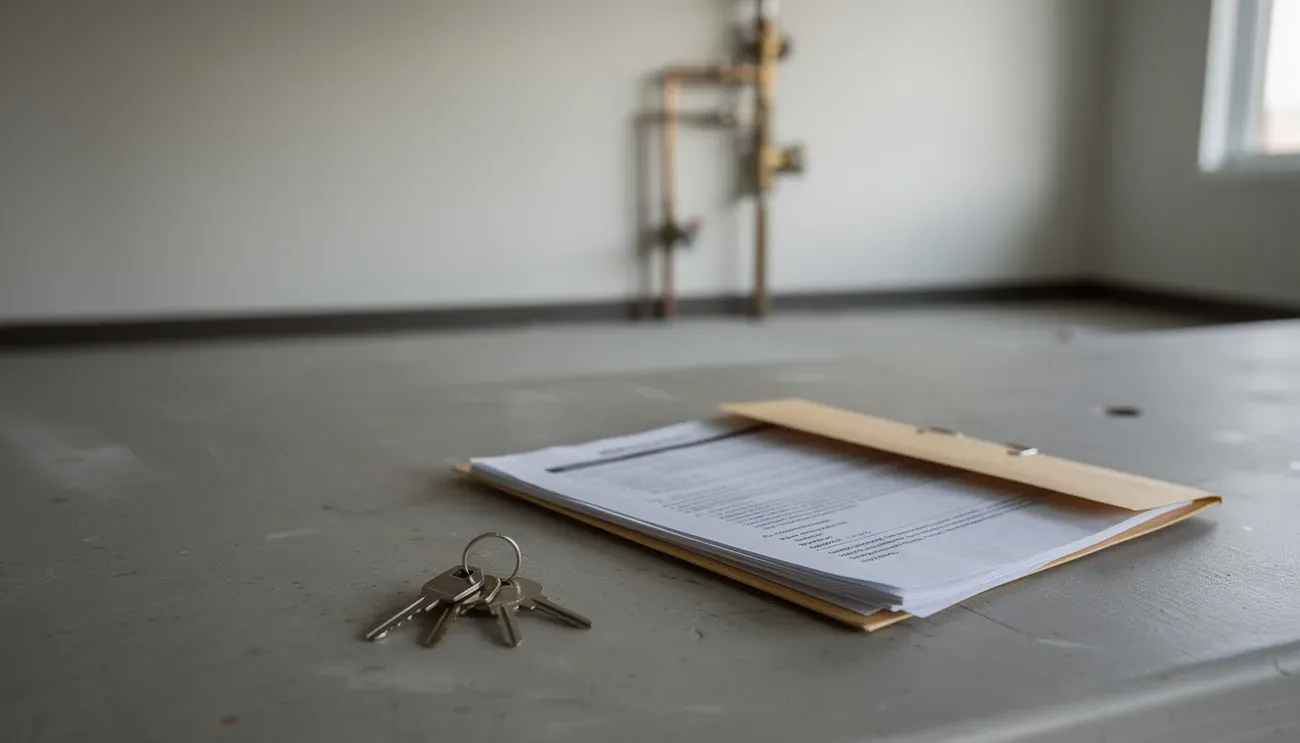
Buildings change hands and tenants change all the time. The backflow preventer stays bolted to the pipe, but the record, the responsibility, and two separate clocks move with the transaction. Here is what to ask for and what to do.
Who is responsible, before and after
By-law 24-2018 puts the obligations on the owner (section 1.1(u): a person holding a fee simple or equitable interest in land). Section 3.3 requires the owner to ensure a premise isolation device is installed. Section 6.3 requires the owner to have it tested annually. Section 6.6 requires the owner to keep five years of test reports on site.
So on a sale, the buyer becomes the responsible party the day the deal closes, for a device they may never have seen, with a test date they may not know. On a tenancy change, the owner is still responsible for the premise device, and the tenant may become responsible for devices inside the unit under the lease.
Two clocks move: the test and the survey
The annual test clock does not reset. The device has an anniversary in the Region’s record and the notice will arrive ahead of it, addressed to whoever the Region has as owner. If the seller tested it in March, it is due next March regardless of who owns the building.
The survey clock does reset. Section 5.3 (as amended May 2026) requires a new cross-connection survey “subsequent any tenant or ownership change, re-zoning of property, change of process or chemical use.” The survey is done by a licensed master plumber, professional engineer or certified engineering technologist (Appendix A), and it may find that the new use needs a different device. A dentist moving into a former insurance office turns a moderate-hazard connection into a severe one, and a DCVA into a required RPZ.
We do the annual test. We do not do surveys. But if you are the new owner or the new tenant, you need to know both clocks are running.
What to ask for on closing (buyer’s checklist)
| Ask for | Why |
|---|---|
| The last five years of test reports | The by-law requires them on site; they tell you the device’s history and any marginal readings |
| The most recent cross-connection survey report | Shows what hazards and devices the Region has on record for the property |
| The device list: type, make, model, serial, size, location for each | So you can find them and match them to future notices |
| The last notice from BSI Online | Confirms the address and reference in the Region’s record |
| The tester’s filing confirmations | A tag is not proof; the record at the Region is |
| Any open notices (install, repair, test) | An unresolved notice becomes yours |
If the seller has none of it: look at the tag on the device, check with the Region or BSI Online what is on file, and price a test and possibly a survey into your first month.
What to do in the first month as new owner
- Update the contact. Ask the Region or BSI Online to update the owner of record so notices reach you, not the seller’s head office.
- Find every device. Our guide to finding your backflow preventer helps; the survey report, if you have it, lists them.
- Check the tags. If any is past a year, that device is due now.
- Book the survey with a plumber or engineer, because ownership change triggers it.
- Book the annual test for anything due, and set the reminder for the rest.
What to do as a new commercial tenant
- Read the lease for who is responsible for backflow devices inside the premises.
- Look at what is in your unit. A restaurant, salon, clinic, lab, or shop with process water almost certainly has a device or should. A plain office probably has none of its own.
- Tell the landlord your use. The landlord is responsible for the survey the tenancy change triggers, and the survey may require a device change to suit your use. Better to sort that out before you open than after a notice.
- If a notice arrives addressed to you, it names the device. Test it if it is yours; forward it if it is not.
Portfolios and property managers
For a manager taking over a building or a portfolio, the same list applies at scale: get the device register, the reports, the notices and the survey dates for every building, update the contact with the Region for each, and put every device’s due date on one calendar. That is the first-month job we help with most often; the property manager page describes it.
Where the annual test fits
Once the transition is done, the annual test is the one recurring obligation. Every device, every year, by an authorized tester, report filed with the Region within 28 days. Our service page explains it; the notice page explains the letter that will arrive next year, addressed, if you did step one, to you.
Questions this raises
Does a change of ownership reset the annual test date?
No. The device's test anniversary stays where it was; the new owner inherits it. What the by-law does trigger on ownership change is a new cross-connection survey (section 5.3), which is a separate, plumber-or-engineer job. Ask the seller for the last test report and the survey report so you know both clocks.
We are a new tenant. Is the backflow device our problem?
The premise isolation device on the building's water service is the owner's under the by-law. Devices inside your unit serving your own equipment may be yours under the lease. Read the lease and read the notice; if a device is inside your premises and serves your process, assume it is yours to have tested unless the lease says otherwise.
What if the seller has no backflow records?
Look for the tag on the device (it carries the last test date and tester), and ask the Region or BSI Online what is on file for the address. If nothing has been tested or filed, budget for a test immediately after closing and possibly a survey. Better to know before closing than after.